If you’ve ever wondered how to feed your family better, you aren't alone. McGreen Acres was founded on the ideals that what you put into your animals is ultimately what you put in to yourself.
Years ago, we started paying attention to what we were cooking with. However, we realized that those same crops we cut out of our kitchen are the backbone of most animal feed in America.
That realization directly shaped how we feed our chickens.
Why Feed Matters
Chickens are monogastric animals. That simply means they have a single-chambered stomach. Unlike cows, they don’t significantly transform what they eat before it becomes meat or eggs.
What goes into the bird shows up in the egg.
If a hen eats a diet high in omega-6 fats (largely from crops like corn and soy) the yolk reflects that. In modern agriculture, most commercial hens are fed rations built primarily around corn and soybean meal two crops naturally higher in omega-6 fats.
Omega-6 fats aren’t evil. They’re essential. The issue is balance. The challenge is that most modern diets already contain far more omega-6 than omega-3 and that imbalance has been associated with increased inflammation. Chronic inflammation has been associated with a long list of modern health concerns.
For us, it's not a marketing angle at this point. It's a health decision.
What We Feed Our Chickens
We feed our hens an organic, GMO/corn/soy free whole grain ration.
Removing corn and soy changes the fatty acid starting point. Choosing organic matters to us because we prefer to avoid the herbicides and insecticides commonly used in conventional grain production. If feed shapes the egg, then how that feed is grown matters too.
We also don’t buy pre-milled feed. We use whole grains and ferment them before feeding.
Fermentation is a traditional process that begins breaking down natural anti-nutrients in grains and improves digestibility for the bird. It takes more planning and more labor. But it fits how we approach food across the farm.
Our hens rotate on grass where they scratch for bugs and forage. That living environment adds nutritional diversity that grain alone cannot provide.
Final Thoughts
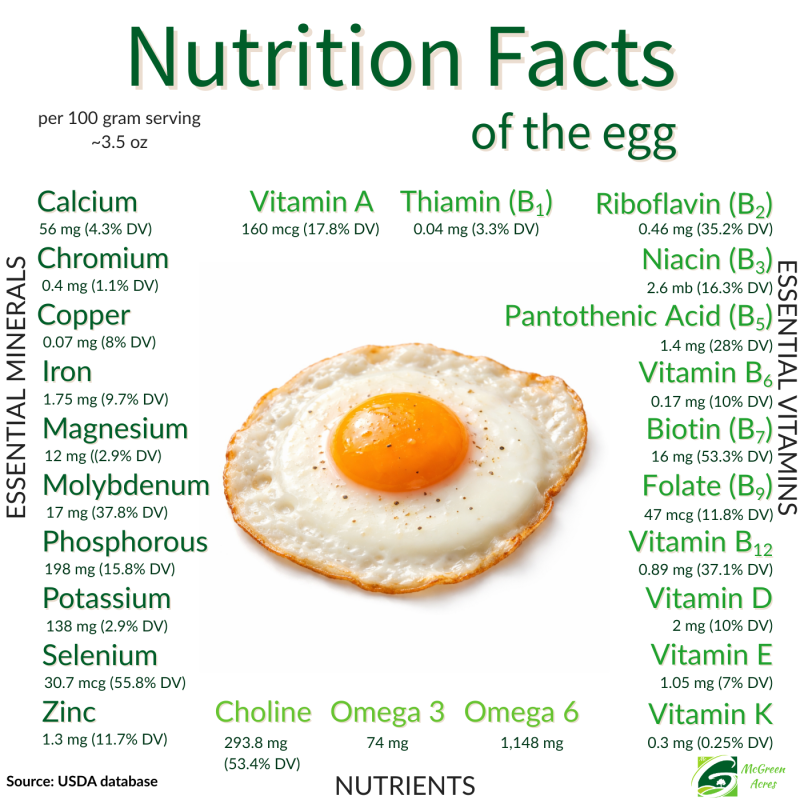
Eggs are incredibly nutrient-dense. They contain complete protein, choline, B vitamins, selenium, and fat-soluble vitamins. Eggs are one of the best whole foods available, period. As you can see below, the only vitamin eggs lack in meaningful amounts is Vitamin C.
If you’re trying to feed your family nourishing food, small decisions add up. The balance of fats in your diet matters. Knowing how your food was raised and what it was fed matters.
We don’t feed corn or soy because we believe it leads to a better outcome in our lives. We would love to share that with you.